
English| EUR
Suggested for you
More currencies
Choose a language
Navigating the transition from the deep canyons of Limón Province back to the Central Valley requires understanding local tour infrastructure. A pacuare river to san jose guide clarifies typical transit conditions and operator protocols after the rapids end.
Quick answer
The journey from the Pacuare River to San Jose takes approximately 2.5 to 3 hours by road, covering roughly 110 kilometers. While river access requires a 0 USD entrance fee, organized trips factor the return transport into their operations. Activities run daily from 06:00 to 18:00, with departures timed specifically to beat afternoon rains on the mountain passes.
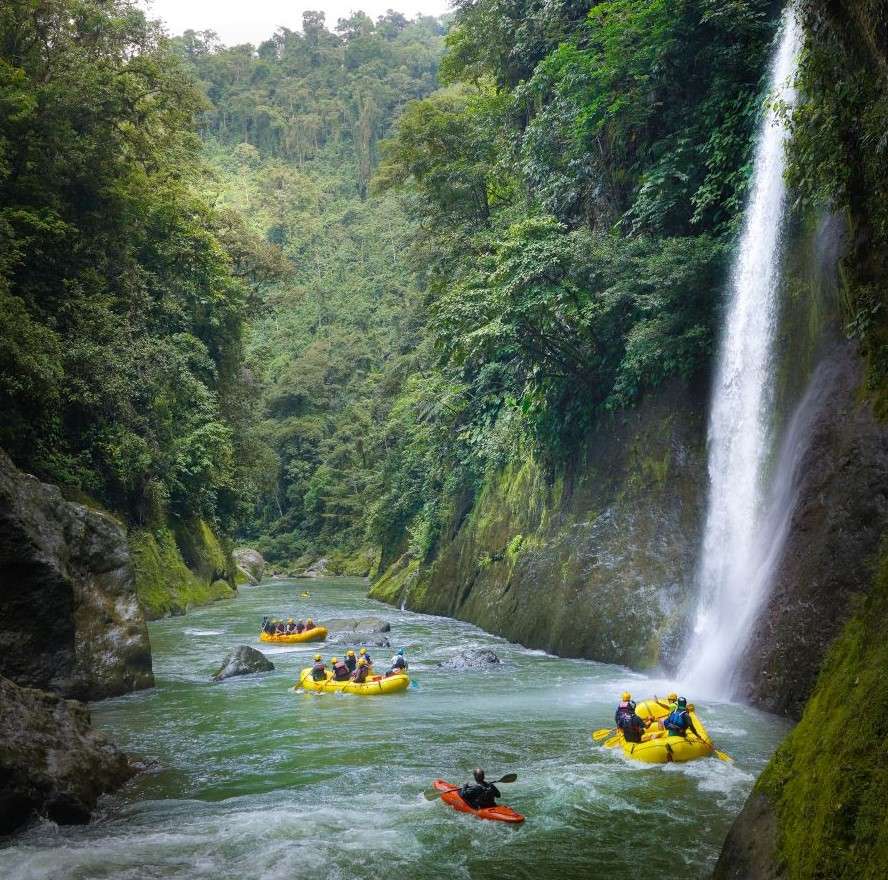
The journey back from the Caribbean watershed involves ascending over 1,500 meters in elevation before dropping into the Central Valley. Planning the pacuare river to san jose transition is a fundamental aspect of navigating Costa Rica's geography, as the landscape shifts drastically from dense lowland rainforest to high-altitude cloud forest within a matter of hours. The river itself originates in the Talamanca Mountains and slices through rugged canyons, meaning the physical extraction point for most visitors sits considerably lower than the capital city. Understanding this topographical change provides context for the route that winds through the country's interior. Most organized excursions along the Class III-IV rapids conclude at designated take-out points on the agricultural plains near Siquirres. From this juncture, the overland return journey traverses a heavily utilized commercial corridor. The route frequently passes through the dense foliage of Braulio Carrillo National Park, a protected area characterized by steep slopes and unpredictable microclimates. Visibility on the winding mountain roads often drops abruptly as afternoon fog and heavy precipitation roll over the ridges. Navigating this section of Route 32 requires recognizing that weather conditions heavily dictate travel efficiency. The geography restricts alternative road networks, forcing all westbound traffic through this primary artery. Travelers typically experience a distinct temperature drop as the elevation increases during the drive. The humid, tropical atmosphere of the lower Caribbean slope gradually gives way to the cooler, temperate climate of the central plateau. This transition highlights the biological diversity of the region, visible directly from the highway as agricultural lowlands morph into dense forest canopies. Tour operators running the daily 06:00 to 18:00 river schedules structure their afternoon vehicle departures specifically to navigate these mountain passes before darkness obscures the often-shrouded roads. While the physical distance is relatively short on a map, the complex topography ensures the transit is a notable phase of the excursion. The logistical realities of the region mean that independent navigation between these two points is rare, as the infrastructure heavily favors coordinated group movements originating directly from private riverbanks. The physical extraction from the isolated canyons necessitates this reliance on established operators, who maintain facilities and vehicle fleets specifically for this purpose. Those evaluating the pacuare river to san jose segment should view it not merely as a required commute, but as a concluding cross-section of the diverse ecosystems that define the country's central mountain range and structural divide.
“The complex topography ensures the transit is a notable phase of the excursion, acting as a concluding cross-section of the diverse ecosystems that define the country's central mountain range.”
The best arrival window for activities on the Pacuare River is 06:00–08:00 to align with standard tour operator logistics and avoid afternoon rain. An early start is essential for safety and to complete the journey from San Jose before weather conditions shift.
Dry season, 24°C–29°C
Clear skies and lower river levels provide consistent rafting conditions for most travelers.
Rainy season, 22°C–27°C
Afternoon rain showers are frequent, making morning departures necessary for safety.
—
Visiting mid-week offers a quieter river environment and easier coordination with transport logistics.
Verdict: The best time for travel is the dry season from December to April, arriving between 06:00 and 08:00 to prioritize safety and favorable weather.
The Pacuare River is located in the Limón Province of Costa Rica. Most visitors arrange return transport to San Jose through organized rafting tour operators to navigate the mountainous terrain efficiently.
Route 32 via Limón
Public transport from Siquirres to San Jose
Private transfer to San Jose
Coordinate your return transfer directly with your rafting operator, as most packages include managed ground transportation back to the capital.
The Pacuare River access remains open daily to accommodate rafting excursions and visitors exploring the Limón Province.
Access to the Pacuare River is free of charge for all visitors. Any costs associated with a visit are specific to organized rafting tours or transportation services.
Verdict: While river entry is 0 USD, visitors typically pay for third-party rafting tours which vary based on the service provider and logistics.
Prepare for your journey from the Pacuare River to San Jose by organizing your travel documents and packing appropriate gear.
Everything you need to know about pacuare river to san jose
Travel time between the Pacuare River and San Jose typically ranges from 2.5 to 3.5 hours depending on road conditions and your specific departure point. Most visitors coordinate transportation directly with their professional rafting operators to ensure a seamless transition back to the capital. Utilizing organized group shuttles is the most common way to complete the pacuare river to san jose transit efficiently.
While we do not sell tickets directly, professional rafting operators provide comprehensive logistics for the pacuare river to san jose return trip. These operators manage vehicle transfers as part of their standard excursion packages. You should confirm your return transfer arrangements when finalizing your whitewater rafting tour booking.
To align with standard tour operator logistics and avoid the high probability of afternoon rain, the best arrival window is between 06:00 and 08:00. Arriving early ensures you can maximize your time on the water before conditions change. Planning your day around this window is essential for a safe and enjoyable experience.
The Pacuare River itself has an entrance fee of 0 USD as it is a natural waterway. However, individual rafting tours charge fees for their professional services, equipment, and guided transportation. Always check with your chosen excursion provider regarding what their specific service package includes.
Yes, many rafting excursions are family-friendly, though age and weight restrictions are set by individual operators based on river levels and difficulty. Ensure you communicate with your rafting guide ahead of time to verify safety requirements for minors. Operators prioritize safety protocols for all participants during the descent of this world-class waterway.
You should bring secure water shoes, quick-dry clothing, sunscreen, and a change of clothes for after your rafting session. A waterproof camera or dry bag is recommended to protect your belongings during the excursion. Ensure your essentials are packed in a compact bag that fits easily into shuttle transport.
The river area is accessible daily from 06:00 to 18:00 throughout the week. These hours allow for consistent scheduling of morning rafting departures. Please plan your transit from the pacuare river to san jose to occur after your scheduled excursion concludes within these operating times.