
English| EUR
Suggested for you
More currencies
Choose a language
Pacuare River operators enforce a uniform set of prerequisites before allowing guests into Class III and IV rapids. The thresholds exist to protect both participants and guides, and every licensed outfitter in the Turrialba-Siquirres corridor applies them without exception.
Quick answer
River rafting requirements on the Pacuare include a minimum age of twelve years, moderate cardiovascular fitness to paddle continuously for two to three hours, and the ability to swim fifty meters unassisted. Operators conduct a brief health screening at check-in and require signed liability waivers from all participants or their legal guardians.
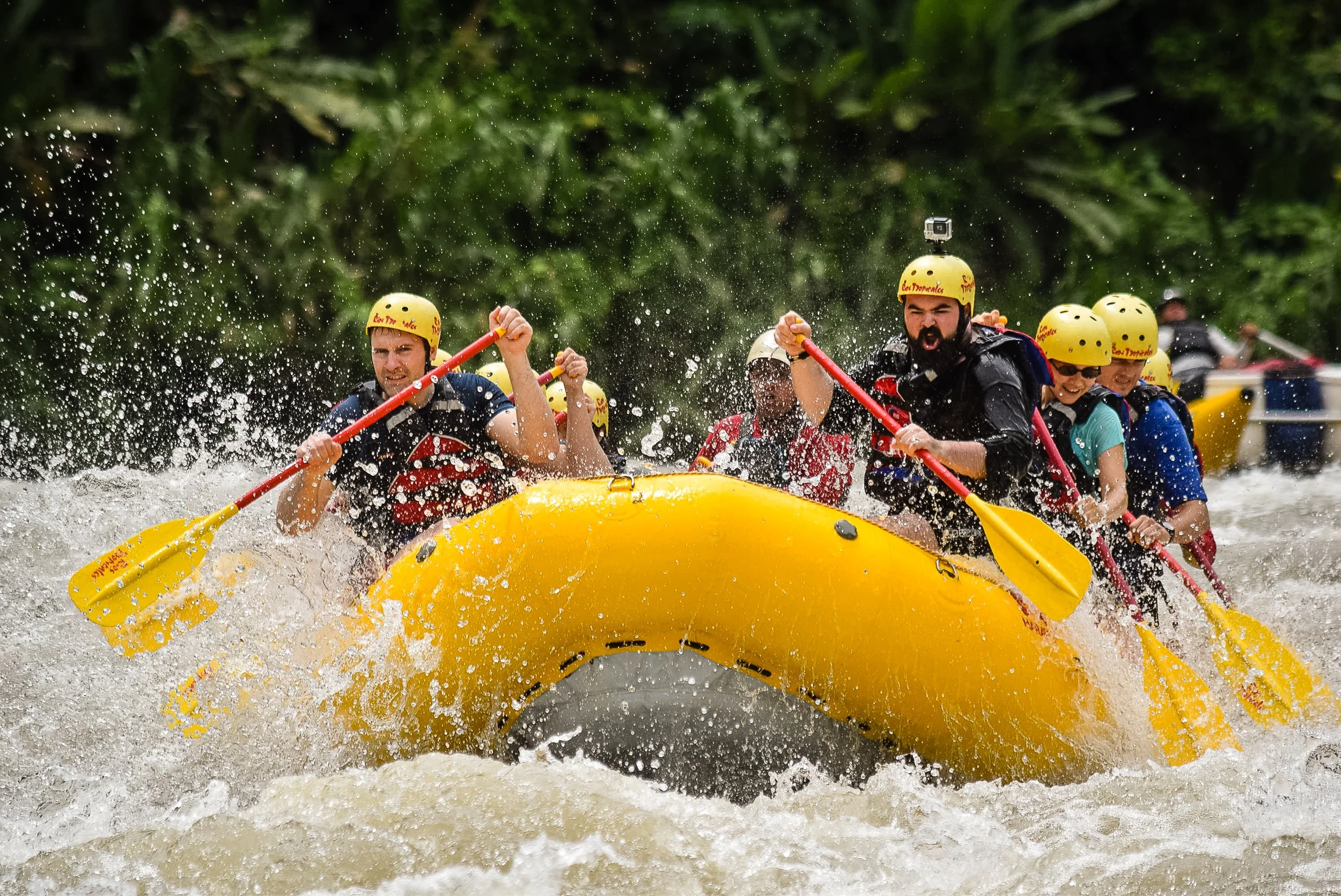
Every commercial operator licensed to run the Pacuare enforces the twelve-year minimum because Class III and IV rapids demand both upper-body strength and the cognitive ability to follow paddle commands under pressure. Children younger than twelve lack the arm span to generate effective strokes in a six-person raft, and guides cannot safely compensate for a passenger who freezes mid-rapid. The cutoff is not arbitrary—it reflects two decades of incident data across Costa Rican rivers. Swim competency matters less for staying afloat—life jackets and helmets are mandatory—and more for self-rescue if you are ejected from the raft. Guides train participants to assume the defensive swimming position, feet downstream and head up, then swim aggressively toward the raft or shore when instructed. A rafter who panics in the water or cannot execute a basic crawl stroke becomes a liability in continuous Class III sections where the next rapid arrives within seconds. Operators ask you to demonstrate a fifty-meter swim or sign an acknowledgment that you understand the risk of entering white water as a non-swimmer. What rafting operators call moderate fitness translates to sustained paddling without cramping or exhaustion. You will execute forward strokes, back paddles, and high-side maneuvers for twenty to thirty minutes at a stretch, then rest in calm pools before the next rapid sequence. Guides do not expect athletic conditioning, but they do expect you to generate power on command. Participants over fifty-five or those with cardiovascular conditions should consult a physician before booking, and most outfitters request a signed medical clearance for anyone with disclosed heart, respiratory, or joint issues. The liability waiver is a legal requirement under Costa Rican adventure-tourism law. It enumerates the inherent risks—drowning, collision with rocks, hypothermia, and entrapment—and confirms that you are participating voluntarily. Operators will not launch a trip without a signature from every adult and a parent or guardian signature for minors. The waiver does not absolve the operator of negligence, but it does establish that you were informed of the activity's nature before entering the river.
“Guides train participants to assume the defensive swimming position, feet downstream and head up, then swim aggressively toward the raft or shore when instructed.”
Prepare for Class III–IV rapids by confirming fitness levels, gathering personal essentials, and securing your booking in advance.
The best arrival window is 06:00–08:00, which allows for optimal water levels and completion before the onset of afternoon rain. Aligning your trip with seasonal rainfall patterns is essential for managing the river's technical requirements.
24°C–30°C; lower water levels
Water levels are lower and more technical, providing consistent rafting conditions throughout these months.
22°C–28°C; frequent afternoon rain
Higher water volumes increase river intensity, requiring experienced navigation and early departures to avoid afternoon storms.
—
Arriving at 06:00 ensures you are on the water before the heat and peak river traffic from larger tour groups.
Verdict: The best time to visit is during the early arrival window of 06:00–08:00 on weekdays between December and April for stable conditions.
The Pacuare's Class III–IV rapids demand strict adherence to safety protocols. Your guide's instructions and proper equipment use are non-negotiable for every paddler on the river.
The Pacuare River is located in the Turrialba and Siquirres region of Costa Rica. Accessing the river launch points from San Jose is most efficiently achieved via organized shuttle services or private transport to ensure timely arrival at the starting locations.
Route 32 to Siquirres or Route 10 to Turrialba
Public bus from San Jose to Turrialba or Siquirres
Direct private transfer from San Jose
To align with standard river operations, plan your travel to fall within the best arrival window of 06:00–08:00. Coordinating with a professional rafting operator for transportation is the standard method for reaching the riverbanks securely.
Access to the Pacuare River is free, as there is no formal entrance fee for the waterway itself. Costs are instead determined by professional tour operators who provide the required safety equipment, certified guides, and river navigation services.
Verdict: Visitors pay 0 USD for river access, while total costs fluctuate based on the specific rafting tour operator selected.
Everything you need to know about river rafting requirements
To participate in river rafting, guests must generally be in good physical condition and able to follow safety instructions from the guide. Meeting these river rafting requirements ensures that all participants can enjoy the rapids safely.
Most operators do not require previous experience to satisfy basic river rafting requirements for Class III and IV rapids. Guides provide a comprehensive safety briefing before departure to ensure all participants are prepared.
While specific age limits vary by operator, most river rafting requirements specify a minimum age, often around 12 years old. Families should verify these specific age-based river rafting requirements with their chosen tour provider before booking.
The best arrival window of 06:00–08:00 is essential because it helps avoid afternoon rain which can affect river levels. Adhering to this arrival schedule is one of the most important logistics-related river rafting requirements for a successful trip.
Entrance fee for the river itself is 0 USD as it is a public waterway. However, professional whitewater rafting tours are priced individually by licensed operators.
Transportation logistics are not part of the base entry fee and are handled by your tour operator. Guests should coordinate pick-up times from San Jose to ensure they arrive within the optimal daily window.